
Events in recent times have prompted me to write this article to set out my current thoughts on the world of NLP.
Over the last two decades I’ve seen and heard a lot from the world of NLP and this is an honest appraisal for 2020. Let me start out by saying that there is a difference between the NLP tools and the behaviours of those who use such tools. The tool kit has been invaluable in decoding Frank Farrelly’s work as well as creating the Provocative Change Works model.
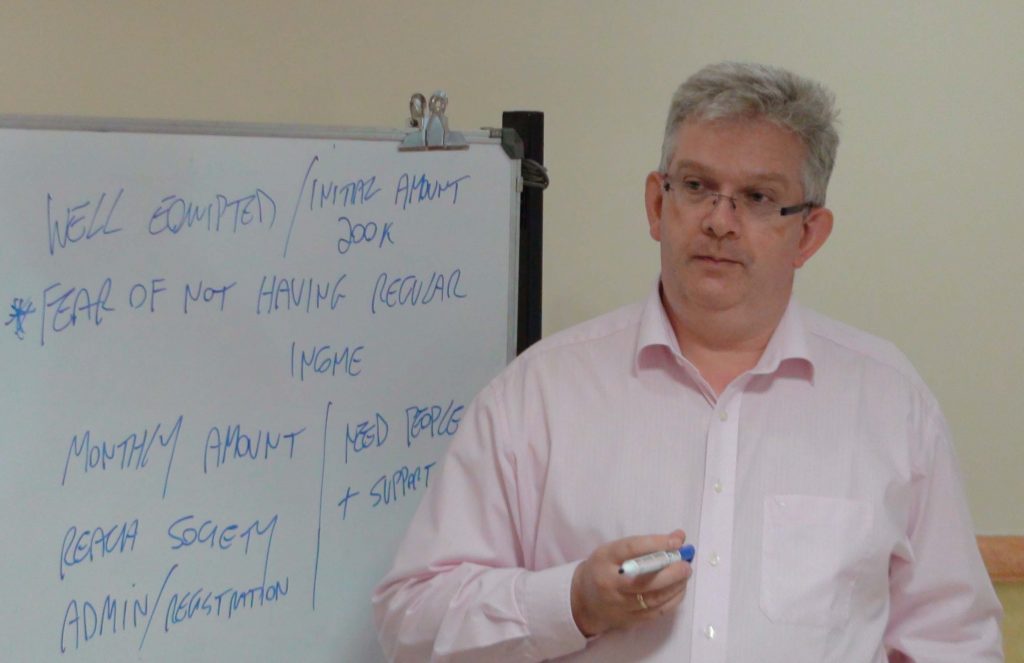
1999 – 2004
I had heard about NLP in the early 1990s and finally took a course in 1999 in London. This was a Richard Bandler 7 day accelerated training and I was surprised to find I was one of 350 attendees in the room. Paul McKenna and Michael Breen were co trainers and it was a fun 7 days, but I left with a very fragmented idea of what NLP was and certainly didn’t consider myself to be a certified NLP practitioner, even though I had the official certificate. Most people came to see “the man on the telly” aka Paul McKenna and a fair few people asked, “Who’s the old guy?” and they were not referring to Michael Breen! It was a fun 7 days, but in my opinion more entertainment than education, but good fun! I later found out that my UK host for PCW Pete Dalton was on the exact same training.
A friend of mind only managed to attend 3 of the 7 days due to unforeseen events but still received the exact same NLP certification. Still, at 499 plus vat it was good value for money. It was clear to me back than that the certifications were really for attendance with no actual examination of skills, but back then and now often people frame such items as “qualifications”
I then took a number of other NLP trainings in the UK, USA are Ireland including NLP Master practitioner, Meta Master practitioner, NLP Trainer, DHE practitioner, Hypnosis in Depth, NHR training, Persuasion engineering and many others. After the practitioner these other courses gradually allowed me to make more sense of the model and in 2004 I started running NLP certified trainings for the public under the brand name “Tranceforming NLP”

Tranceforming NLP would run a fair number of trainings each year, typically two practitioner courses, a master practitioner course, public speaking weekends as well as hosting other trainers around the world. During this time, I was also assisting on many major London NLP trainings and in one year worked behind the scenes for 33 days on a voluntary basis. This experience was invaluable in learning how to run a training and how to avoid classic mistakes. One of the problems with these major trainings was that there was a sales team who were targeted to flog places and in some instances people would show up with all kinds of crazy expectations including being told that Paul McKenna would personally sort out their phobia!
As well as running SNLP certificated trainings, I also started to write articles for several magazines, set up a site nlpmp3.com which hosted audio from major NLP trainers from all over the globe. In 2001 I started creating a series of audio products under the Human Alchemy brand and these sold very well across the globe directly from myself and via Anglo American Books. I was also surprised to discover that many longer term NLP folks had never created any of their own products and later realised that many didn’t have any interest in a creative process but saw being in “the society of NLP” as more of a social club that any form of education. Nothing wrong with that of course, but my interest was only in learning, not being part of a group.
Concerns about NLP behaviours…
Even though I was using the skills in many ways, I began to have concerns about the behaviours of those teaching and promoting NLP. There was an increasing suggestion of “us and them” in terms of which NLP groups you associated with, a bit like football clubs which had there own fanbase. I also became more aware of the commercial aspect to those running these trainings and remember being told as an assistant on one NLP practitioner training to “start pushing the master practitioner training” to attendees on the second day of the course. There seemed to be more interest in filling course spots than in providing any quality control. Considerable time during the training was spent bad-mouthing other NLP approaches, which seemed odd. This is of course my personal view, many people clearly loved this group style activity and thinking, but it started to make me wonder about if I would continue with this association.
On one major NLP London course 15% of the attendees dropped out after the first day, which quite surprised me. This was a training with literally humdreds of people and there was from what I observed a lot of confusion in the room and the assisting team worked flat out to help those attending make any sense of what was being taught.
This NLP world seemed increasingly hierarchical, which in itself is not automatically a problem, but in this instance, it resulted in some very odd outcomes. On one course I was assisting on, the head assistant kept insisting that one of the other assistants was recording the training. This was pure imagination on his part and created a very odd dynamic among the team.
During another training session, an assistant insisted that the main trainer could control the weather. I thought she was joking, until I realised she was deadly serious. Countless other examples seemed odd. Many involved in this world had significant financial concerns, and some had real health issues which they thought could be rectified by NLP visualisation, despite being permanently unwell with all manner of colds. The dynamics of these training sessions seemed increasingly like a religious rally rather than a learning environment. Nothing wrong with some good old time evangelical whooping, but not really to my personal taste.
Meeting Frank Farrelly
In 2004 I first met Frank Farrelly, the creator of Provocative Therapy after Richard Bandler referenced him in a 2003 London training. I’m forever grateful for that introduction and told Richard in person during one of the interviews I did with him over the years.
My first training with Frank was with a group of just 17 people, which Was tiny compared to what I was used to with many NLP trainings.
I was immediately struck at how skilled Frank was and how he worked in a very conversational manner. He could do everything I had seen work in the NLP tool kit but in a fraction of the time. I began hosting him in 2005 and we became good friends. In 2006 I released “Provocative Change Works for Phobias” with Frank commenting on the sessions. It was at this 2004 that I met Andrew T Austin and we became good friends and professional colleagues to this day. Andrew has created an extraordinary body of work envied by many in the NLP world as they simply do not have that level of critical thinking.
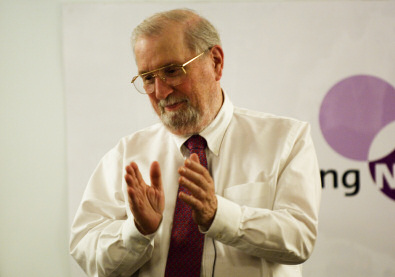
Frank of course knew very little about NLP except being hosted by the creators in the 1980s. To say that Frank was unimpressed was an understatement. Richard Bandler made the following comment on Frank –
“You know, Farrelly had to be one of the most courageous people on the face of the earth… What I respect about Frank is that he stuck to his guns. No matter how much they told him therapy should be boring or how much they told him he was over the edge, what he noticed is he made people better”
Around the same time, I was invited to join ANLP and they seemed a sensible group, so never considered that this would be taboo in the Society of NLP which was the certifying body for my NLP students who now for a number of years received both SNLP and ANLP certifications.
Parting company with SNLP
In 2009 after running certificated trainings for many years, out of the blue I received an e-mail stating I could no longer be part of SNLP as I was “aligned with ANLP”* This communication came via e-mail, no discussion by phone after a whole decade of interaction. This was a genuine surprise, but I wasn’t especially bothered at this point as it was clear to me that I had learned all I wanted from NLP and now was firmly following Farrelly’s work and had already hosted him for many years in the UK. The initial 1999 training was excellent, but by 2003 I realised that for me personally there was nothing new in any of these trainings, although many were repackaged in various ways.
The UK was now also flooded with new NLP trainers all teaching 7-day trainings to the same template and in my view the quality started to really go downhill. Some workshop attendees would literally pay for a 7-day practitioner, a ten-day master practitioner and directly go on to do a trainer training. In a few weeks they were an NLP trainer, now training others, despite having no fly time to develop skills! Its such a wasted opportunity as with a bit more quality control the whole field would be seen in a much better light by other professionals and the wider public.
One new NLP trainer ran an NLP master practitioner with his sister and her friend. I can’t imagine how horrendous it would be to work with just one other person for weeks on end. It was definitely time to move on especially when a master trainer candidly comments
“We just unleashed yet another batch of practitioners on an unsuspecting public”
This was my final sign-off to SNLP to end this era of association in reply to the very brief e-mail saying I could no longer be “recommended,” which did make me chuckle.
Here is the very last communication I had with SNLP on 19-08-2009
Hi
Good to hear from you.
In the United Kingdom therapists working with clients are expected to practice ethically, be registered with a professional body and carry professional insurance. ANLP as a UK based concern supports this ethical practice and provides services to educate and support individuals in their clinical practice as is expected by their clients.
I am not aware of having to be “aligned” with either SNLP or ANLP and many SNLP members are also ANLP members. Furthermore in 2003 I was told that SNLP and ANLP had settled any of the crazy old disputes and for years many SNLP trainers and Master Trainers have of course been happy to be featured in the Rapport magazine (sometimes on the front cover) run by the ANLP and to take advantage of all advertising opportunities.
FYI I was invited to be part of ANLP as far back as 2007 and Tranceforming NLP offered membership to both SNLP and ANLP on their courses.
ANLP does not “certify” anyone and in my view promotes a good standard of ethics and standards as well as being a Community Interest Company that is not “aligned” to any commercial NLP business. I have however become increasingly concerned that NLP seems to be more about commercial interests than the promotion of learning and good practice. This is obviously more relevant for those of us working in private practice.
That having said my main interest these days is in promoting my own work and Provocative Therapy, having in 2008 set up The Association for Provocative Therapy to promote standards internationally with a code of ethics.
After 10 years of promoting NLP, assisting on scores of London events, recommending others to RB SNLP events, and recommending RB SNLP products I am actually quite amazed by the tone and content of your e-mail.
I will however gladly remove your personal testimonial and references to being a current member of RB’s SNLP from any sites and marketing materials as requested.
I really had thought that this “whose gang are you in mentality?” was a thing of the past.
Obviously, it appears I was wrong!
Finally, your e-mail actually reminds me of the old Groucho Marx quote
‘I don’t care to belong to a club that accepts people like me as members”
Regards
Nick Kemp

Bear with me
Meeting Steve Andreas – a new era of exploration and discovery
From 2009 my trainings started to skyrocket and a big part of this was hooking up with Steve Andreas who reviewed by 2006 phobias DVD. I have my good friend Andrew T Austin to thank for suggesting I send Steve a copy. In subsequent years I was invited to San Francisco and Colorado to present by own PCW model. I found the NLP Comprehensive trainings to be the more comprehensive (please excuse the pun) trainings I had seen to date. Students not only understood the material, but also could demonstrate the skills.
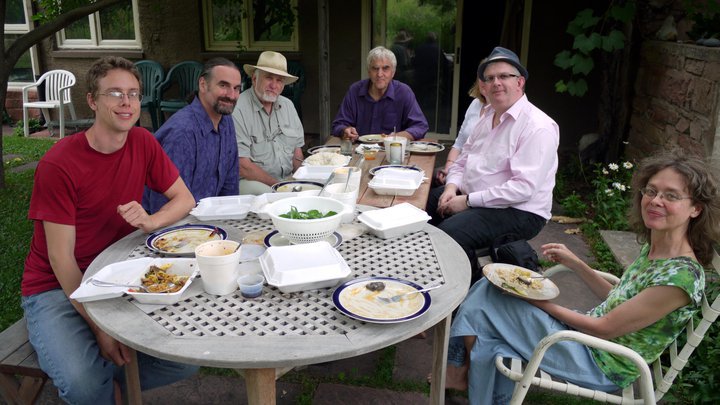
Steve was a brilliant mind and of course a massive influence on maintaining quality control in the world of NLP. He was also firmly interested in what works, rather than “being right” Through Steve I also met Frank Bourke, who founded the NLP Research and Recognition project which was totally unsupported by the creators of NLP, but has done sterling work in genuinely helping people.

Before he died, I interviewed Steve for Rapport Magazine and asked him the following question
Nick: What in your opinion is NLP’s greatest contribution to the field of personal change, and biggest missed opportunity?
Steve: The greatest contribution is the use of pure process interventions for an infinite variety of content. For instance, the phobia cure uses a submodality change in visual perspective to change the response to any terrifying experience—whether the content is spiders, heights, stuffed olives (my all-time favorite) not seeing the feet (runner-up) or a memory of hand-to-hand military combat. This greatly simplifies “trauma work,” because all you need to know about the problem is that the client is associated into a terrifying memory. Without knowing the content, or altering it in any way, you can offer a process intervention that will change their terror into the more objective feelings of an outside observer of the same event. The same is true of the interventions for grief, shame, anger, regret, and other problems or outcomes.
Missed opportunity? In the early days, Bandler and Grinder went out of their way to insult mainstream therapists. No matter how accurate and richly deserved, those insults weren’t useful in enticing therapists to learn NLP. In contrast, Francine Shapiro took one very small element of NLP—that eye position can be used to drive changes in how an experience is processed—simplified it, “packaged” it so that it was acceptable to mainstream therapists as EMDR, and made a hugely successful industry out of it.
I also asked him the following and was both surprised and amused by his reply
Nick: What is your most commonly used (or favorite) technique or pattern, and why?
Steve: Right now, my favorite is the two methods you developed for resolving anxiety: slowing the tempo of the internal voice that triggers the feeling, and your version of using Bandler’s discovery of how the resulting feelings spin. They are my favorites for several reasons. Firstly, they have wide application; I’ve found that anxiety is a key part in something like half of the problems that people want to change. Secondly, they both exemplify the lasting impact of very small adjustments in nonverbal submodalities. Thirdly, they are particularly elegant simple recipes that don’t require exquisite hypnotic or verbal skills. Fourthly, the processes are so robust that someone can mess them up in many ways and they will still work. Finally, they are both very rapid; my YouTube video demonstrating spinning feelings is only 8 minutes long. At three-year follow-up the client is still free of her “life-long anxiety.”
Steve was a brilliant mind and called it as he saw it. He reminded me greatly of Frank Farrelly, two titans in the world of personal change and therapy, always respectful and always working in the best interests of the client, happy to share insights and never driven by commercial considerations.

Steve also introduced me to Richard Bolstad and Richard Gray, both excellent minds with a great sense of humour and genuine care for other people. They are also very well grounded and a total contrast to some of the bat ship crazy behaviour from many other characters.
The idiotic “bashing NLP” accusations
When I have pointed out some really dreadful NLP behaviours I am met with the inevitable stereotypical chant
“YOU’RE BASHING NLP!”
I then respectfully point out that NLP is not “a thing” so you can’t hit it and the tools are not the behaviours. I championed NLP for many years, contributed to the excellent “Innovations in NLP” book, Steve Andreas’s “Tranceforming Negative self talk, appeared on BBC radio talking about NLP for 26 weeks in a row, wrote and had published articles in countless magazines, promoted other NLP trainers, designed and ran an NLP based training in education, taught NLP pro bono, ran courses for many years among many other activities.
Anyone with even the smallest amount of intelligence will appreciate that there is an extensive association with NLP, but I always have and continue to retain constructive discrimination in all matters and am mindful of the “emperor’s new clothes” tale. I am happy to agree to disagree with others, that’s how we learn, but I’ll always stand up for good behaviour and the importance of validated results, rather than being a member of any club.
Whenever I hear people spouting this nonsense, I am reminded of one of my favorite quotes
“He may look like an idiot and talk like an idiot but don’t let that fool you. He really is an idiot.”
Groucho Marx
In recent years and talked to a number of professionals outside the world of NLP to ask their views.
They all made the following comment – “Nick, they don’t like you challenging their ideas and concepts, that reply is a knee jerk easy cop out”
Provocative v Controversial?
The purpose of “provocation” is to stimulate new thinking and new ideas. Personally I find the idea of constantly exploring a really inspiring possibility, BUT some will disagree. Those who have a vested commercial interest is a lack of new thinking often frame any such suggestions as “controversial” as if new thinking was a bad thing. Of course if you look closer you will see that such individuals have never created any original work themselves and instead recycle the same old material usually to the same audience.
Frank Farrelly describe the meaning of “provocation” in the following way
The root meaning of provocative is pro + vocare, to “call out”, and there are five different types of behaviors that are “called out” in the client in this approach. Every single interview with every single client does not elicit all five of these, but each interview with each client demonstrates at least some of these five.
The client, then, is provoked by the therapist to:
- Affirm his self-worth, both verbally and behaviorally.
- Assert himself appropriately both in task performances and relationships.
- Defend himself realistically.
- Engage in psycho-social reality testing and learn the necessary discriminations to respond adaptively. Global perceptions lead to global, stereotyped responses; differentiated perceptions lead to adaptive responses.
- Engage in risk-taking behaviors in personal relationships, especially communicating affection and vulnerability to significant others with immediacy as they are authentically experienced by the client. The most difficult words in relationships are often “I want you, I miss you, I care about you” — to commit oneself to others.
Covid 19 and a new low in NLP behaviours
There are many examples of really odd and dysfunctional NLP behaviour during Covid 19, a whole new level of stupidity that even I thought impossible. For those faint of heart, skip the next section
Here are a few of many examples
- Running a live training during the height of covid 19 with attendees posing for photos at the end of the training
- Insisting that by using “NLP filters” you can create immunity against a global health pandemic
- Defaming other trainers online with really ill-advised comments that are both poor manners and show a lack of awareness as to the difference between “fair comment” and actual libel
- High pressure small/boutique trainings where the attendees are sold the dream of “a new career” which of course is a new level of delusional thinking as any professional career requires study and application over more than just a few weeks in a person’s living room.
- Pressurizing an attendee to attend a course when her mother had just died, failing her numerous times on the NLP course, but still insisting she work as an unpaid assistant while telling her she had no skills!
Here’s my prediction, you will now see a whole new slew of “cope with covid 19 anxiety with NLP” hit the market along the daft “NLP shields against Covid 19” nonsense
NLP Master Trainers
The worst behaved are often those further up the NLP food chain and its little wonder many of the public view NLP as cult like and pseudoscience. It is a real shame as the core skills are superb, but those presenting NLP to the outside world have often failed to maintain any basic manners and quality control in what is taught.
Over a period of 20 years it seems that many (not everyone) who ascends to “Master Trainer” level becomes extremely delusion, loses all sense of humour and often (not always) is in the business for a cash grab. It’s a real shame as it could be very different and I suspect part of the problem is that for many characters NLP is their whole world, there’s not much else going on.
There are many skilled trainers out there, but my observation, especially in the UK, is that there’s some really odd behaviour. Part of this, in my view, is due to commercial considerations, in which such individuals make all manner of hyped claims about their teachings.
How will NLP be remembered?
Three of the most useful conversations I ever had about NLP were with Professor Bob Spitzer, Steve Andreas and Frank Farrelly, creator of Provocative Therapy.
Bob knew the co-creators prior to NLP. He and his wife Betty were terrific characters and I spent some time hearing an unfiltered version of what happened pre NLP creation and all the different dynamics including the famous murder trial and subsequent court case where the co-creators fell out of rapport. It was refreshing to hear stories from the very early days that were not framed with commercial considerations in mind.
Frank Farrelly also had some very interesting stories about NLP trainers traying to pass off his work as their own. When he passed, he left me his entire life work of material that I now use a source material for 1 – 1 students. Frank had a great insight into the NLP creators, but that’s a subject for another time.
Steve Andreas was forensic in his thinking often pointing out the absurdities in what was being flogged as “New NLP”. I have met many terrific people in NLP circles who continue to inspire but I suspect the brand of NLP has been permanently damaged by status seeking, personal greed and some quite bonkers behaviours.
There is an increasing incongruity between what is promoted in ad copy and what is delivered in real life. Many NLP institutes have gone bankrupt and many trainers have all manner of real psychological and health issues. The advent of social media has resulted in numerous alcohol fueled tirades and one master trainer is still insulting another trainer who passed away a few years ago. This IMO suggests the guy has a real psychological problem and this character would benefit from some non NLP professional help. Some characters are too stupid to know the difference between “fair comment” and libel and may benefit from learning about such distinctions, especially if they run an NLP academy or training company.
Let us end on a positive note
In stark contrast there are others who really care about how to best use the skills and have a genuine interest in helping others. I am grateful to many smart brains who have I have interacted with over the years and who have greatly helped me formulate the PCW model. My schedule is busy all around the world and crucially we are interested in constantly developing and refining new ways of working and more interested in what works than “being right” Special thanks to hosts in Japan, USA, Austria, India, Russia, Hungary, Spain, UK, Switzerland, Poland, Israel and other countries.
These days, I distance myself from NLP, except to teach my own model and work with like-minded people. The NLP toolkit is the toolkit, NOT the behaviours. I’m again reinforcing the distinction as people still talk about “going to war against NLP” Much of what was classic NLP is now integrated into more credible communication systems which the wider public has embraced. I think Steve Andreas made the best observation when you wrote a sign to put up at the front of the class in Boulder where I taught alongside some other smart minds which read
“No one of us is smarter than all of us”
If the NLP world embraced that concept, things could be very different, but that would require some self reflection, duty of care and as Frank Farrelly would say
“Throwing away your professional dignity in the service of others”
Nick Kemp
June 2020
* I no longer endorse or associate with any of the self created NLP certification bodies as I have yet to see any that in my view sufficiently uphold professional standards for the field of NLP. In many instances they create the impression of “certifications” being “qualifications” which some characters then leverage for commercial gain in selling places on trainings
Can anyone can “certify themselves” in NLP?
What’s commonly not known is the following, which I flagged in the recent “25 years on the firing line” training –
“In February 2000, the Court found against Bandler, stating that “Bandler has misrepresented to the public, through his licensing agreement and promotional materials, that he is the exclusive owner of all intellectual property rights associated with NLP, and maintains the exclusive authority to determine membership in and certification in the Society of NLP.”
By the end of 2000, Bandler and Grinder entered a release where they agreed, amongst other things, that “they are the co-creators and co-founders of the technology of Neuro-linguistic Programming” and “mutually agree to refrain from disparaging each other’s efforts, in any fashion, concerning their respective involvement in the field of NeuroLinguistic Programming.”
As a consequence of these disputes and settlements, the names NLP and Neuro-linguistic Programming are not owned by any party, and there is no restriction on any party offering NLP certification.“
Final thoughts
My final question to anyone reading this is, “How much of the motivation from those promoting NLP is for commercial business gain and how much for genuine education?”
I ask this in all seriousness: as the core tools have been invaluable to me, why is the image of NLP after 50 years so poor?
The 50 year NLP celebration was a great opportunity fro the co creators to agree to disagree and come together, but to my total amazement, they couldn’t bring themselves to summon up enough rapport to manage that. Make of that what you will…


Around 1999, by the time you “joined” NLP, it was already clear to me that NLP had reached a dead end. Few new big developments were created in the past 20 years. Most trainers are not investing in research (as one would be obliged to do in an academic context). What has been missing to a large extent, except for a few projects such as the research and recognition project and my own research into meta-programs, has been a scientific approach, as one has come to expect in fields such as psychology and sociology. — Patrick Merlevede (jobEQ.com)
Agree totally
Thank you Nick for a really good read. I agree with you Patrick too, I think that Lucas Derks is beginning to do some very good academic work as well with mental space and his application of NLP through that, especially in the treatment of depression…so I would add that to your list. With best wishes. Bruce Grimley. Achieving-Lives Ltd.
Hi Bruce
Lucas and I were both hosted in Boulder and I know him well. He is a great character with humour and a genuine care for people as well as someone creating really good work. Such folks give me some hope! Thanks for the comment
Best Regards
Nick
I had and still have the luck of meeting in person some of those great developers and critical thinking and learn from them.
Dov
Thank you. For years I have kept my involvement with NLP secret because of the issues you write about. Being in the health professions and knowing it’s culture generated a lot of fear regarding students searching NLP on the web!! I have come out in recent years but am having some regrets.
Great read. I found out about NLP as a teenager around ~2007 and did my first practitioner around 2009. I remember getting a kick out of wading through the piles of bullshit in NLP to find these little nuggets of gold. The egos and rivalries of ‘some old bitter hippies who used to be the shit in the 70’s or something’ was nothing but hilarious and a tad pathetic, there was never any hope for NLP to healthily grow into a unified coherent community, Rome had long ago already fallen and all I could do was try to salvage the odd piece of treasure to take into the future. And having no hope for NLP is great because I think that there’s still a massive void in the world that NLP could have filled should history have gone differently. The lofty ambitions of NLP, that it failed to achieve, are still very much unaccomplished. And once the cult leaders die off and the in-fighting tears apart the organisational structures (and lawsuit machines) the valuable parts of NLP can be resurrected, and perhaps repackaged, and the world will have another chance.
Hi Duncan
Thanks for the reply. The tragedy is that its a brilliant set of skills. The problem is with some of those teaching and marketing it
C’mon man! Stop teasing us. We want to hear Spitzer’s and Farrelly’s stories about B&G in the early days of the NLP cult.
I did go into this in detail in a recent training…
I am trained as a practitioner (10 weeks intro, and a year course, not 7 days 🙂 ) , I am currently mostly housebound living with illness and I have recently realised how much i use NLP in my day to day life and when working to help friends. I naturally integrate it with other approaches. Surely by its very definition it is an evolving modality.
I am sad to hear of its messiness though i was already aware that some trained in NLP seem to be somewhat slow to get clear on a positively stated outcome, demonstrate behavioural flexibility, or demonstrate either sensory acuity or rapport! Strange.
Thanks for the comment
The core skills are excellent and these helped me develop the PCW approach, so I am grateful
However the behaviour of those marketing NLP in my opinion (others will disagree and that’s fine) has reduced the image to one where it looks for many (not all) like some daft cult
Such a wasted opportunity in my (not everyone’s view)
Regards
Nick